Why Career Exploration Works Better When It Starts Earlier
Career Connected Learning In K-5
Across the country, most states formally introduce career exploration and CTE language in the middle grades. By sixth, seventh, or eighth grade, students are often asked to begin thinking about pathways, interests, and future options. For many students, that moment arrives before they have had meaningful opportunities to understand what those careers actually involve.
From an instructional and programmatic standpoint, this creates a familiar challenge. Students are asked to reflect on interests they have not yet had the chance to explore. Career conversations can feel abstract, disconnected from lived experience, and difficult to anchor in real learning.
Career exploration works best when it is treated not as a decision point, but as a developmental process that begins earlier and builds over time.
What Research Tells Us About Early Career Exposure Why Career Exploration Works Better When It Starts Earlier
Research consistently shows that children begin forming ideas about their future roles much earlier than most education systems account for.
Studies examining children between the ages of 5 and 13 indicate that early exposure to real-world problem solving, tools, and applied learning plays a significant role in shaping confidence and self-perception. One widely cited international longitudinal study found that by age 10, many children have already ruled out entire categories of careers. These decisions are rarely based on ability. More often, they reflect a lack of familiarity or exposure. Additional research links early, hands-on exposure to careers with outcomes educators and administrators care deeply about:
- Increased confidence in STEM-related learning
- Greater willingness to persist through challenging tasks
- More accurate understanding of what different types of work actually involve
- Reduced anxiety when later asked to make academic or career-related choices
These benefits are strongest when exposure is experiential rather than informational. Career videos, surveys, and worksheets can introduce language, but they rarely build understanding on their own.
When students are able to build, test, troubleshoot, and reflect, learning becomes concrete. Confidence grows through experience rather than explanation.
The Instructional Gap Educators See Every Day
Most state standards now recognize the importance of career exploration beginning in grades 6–8. That progress matters. However, educators and afterschool leaders often see a gap between policy expectations and student readiness.
By the time formal career exploration begins, many students already carry fixed ideas about what they are “good at” or what is “not for them.” Those perceptions are often shaped by access to early experiences rather than by aptitude.
Students who reach middle school without prior exposure to hands-on engineering, applied problem solving, or systems thinking may struggle to connect career language to real understanding. Exploration becomes theoretical instead of meaningful.
This is not a failure of standards. It is a signal that preparation needs to start earlier, in ways that are realistic for schools and programs to implement.
Exploration Is Not Acceleration
Starting career exploration earlier does not mean accelerating students into adult decisions or formal CTE pathways.
For younger learners, exploration should remain low-pressure, curiosity-driven, and developmentally appropriate. Effective early exploration focuses on helping students:
- Understand how real-world systems function
- Experience productive failure as part of learning
- Collaborate and problem-solve with peers
- Recognize that skills develop through practice
Engineering-based projects are particularly effective in this age range because they naturally integrate creativity, logic, and iteration. Students are not asked to identify with a career. They are invited to try something, see what happens, and improve.
The challenge for educators and program leaders is not recognizing the value of this approach. It is finding tools that make it feasible.
Where Hands-On, Teacher-Friendly Engineering Fits
Hands-on engineering is often discussed as a goal, but not always as a practical option. Many programs have experienced the two extremes: expensive equipment that sits unused due to complexity, or limited materials that restrict learning to surface-level activities. This is where easily implemented, well-designed engineering projects play an important role.
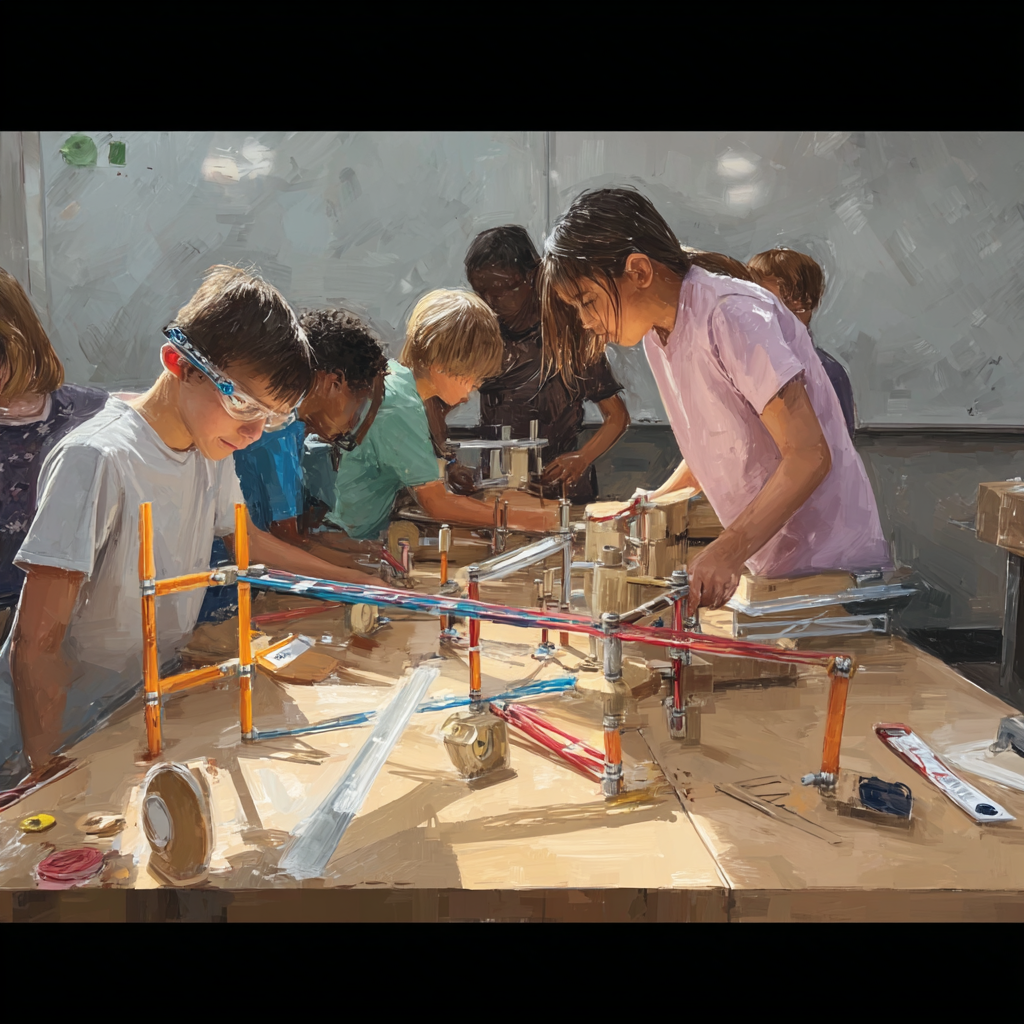
STIIX projects are designed specifically to support early exploration without adding instructional burden. Each project is hands-on, open-ended, and built around real-world systems students recognize, such as water systems, energy, structures, and simple mechanical devices.
Just as importantly, projects are paired with short instructional videos that handle setup and framing. By the time the videos end, students understand the challenge and are eager to begin building. Teachers and facilitators do not need to be content experts. Their role shifts from delivering instruction to guiding discussion, observation, and reflection.
This design makes it possible to introduce meaningful engineering exploration earlier, within the realities of school-day enrichment, afterschool programs, and summer learning.
Supporting Readiness Without Overstepping CTE
CTE programs are most effective when students arrive prepared to engage, not only academically, but also emotionally and experientially. Students who have already:
- Built and tested systems
- Experienced iteration and failure in a low-stakes setting
- Collaborated on open-ended challenges
- Seen how learning connects to real work are better positioned to benefit from formal pathways later.
Early exploration through hands-on engineering does not replace CTE. It strengthens it. It gives students language, confidence, and context before expectations narrow their choices.
STIIX projects support this readiness by focusing on exposure rather than certification, exploration rather than specialization. Students are encouraged to discover what they enjoy, what frustrates them, and how they respond to challenge, long before they are asked to make decisions.
Equity Begins With Access to Experience
Early career exploration is also closely tied to equity. Students who have access to hands-on experiences outside of school often enter middle grades with greater confidence and familiarity with technical concepts. Students without that access may interpret unfamiliarity as inability. When exploration is delayed, opportunity gaps widen.
Providing early, hands-on exposure through accessible tools helps create more equitable starting points. Programs can introduce the same systems and challenges to all students, regardless of background. Because STIIX projects are reusable, affordable, and easy to facilitate, programs can serve more students without increasing complexity or cost. This helps keep participation broad and inclusive.
The Role of Afterschool and Extended Learning
Afterschool, extended learning, and summer programs are uniquely positioned to support early career exploration. These environments often offer flexibility that traditional classrooms cannot. Sessions can be adjusted, groups can collaborate more freely, and learning can unfold over multiple weeks. When projects are designed to be open-ended and supported by clear instructional resources, programs can maintain consistency even with rotating staff. Hands-on engineering becomes a shared experience rather than a specialized offering.
Looking Ahead
The question facing educators and program leaders is not whether career exploration should begin earlier. Evidence suggests it already does, informally and unevenly. The more important question is whether systems will intentionally support exploration in ways that are age-appropriate, equitable, and instructionally realistic.
Starting earlier does not mean deciding earlier. It means giving students time to build confidence, understanding, and curiosity before expectations narrow their options. Hands-on, easy-to-use engineering projects offer a practical way to support this work. When students are given space to build, test, and learn from failure, they are better prepared for whatever pathways come next. Partner with STIIX to support bringing these learning experiences to your younger students.
Latest Articles
All Articles.jpg)
Stop "Exposing" Students to Careers—Start Letting Them Build Them
At STIIX, we believe that expertise shouldn't be reserved for high school CTE labs. If we want a generation of innovators, we have to start the "expertise" phase in K-8.
%20%26%20Partnership%20Annoucement.png)
Drone Cadets and STIIX Announce Strategic Partnership to Revolutionize STEM Education and Career Readiness
STIIX, a leader inimmersive engineering and career-connected learning, is proud to announce a strategic partnership with Drone Cadets, a leader in accessible drone education and pilot training. This collaboration marks a significant milestone in STEM education, coupling STIIX’s hands-on engineering curriculum with Drone Cadets’ world-class flight training to create a comprehensive "Build-to-Fly" learning pathway.
From Crayons to Careers: Expanding STEM & CTE Exposure in K–8 Education
Early career exploration is essential for workforce development and to grow the career perspectives for students everywhere. STIIX empowers PreK–8 students through hands-on, project-based engineering experiences that spark curiosity, creativity, and problem solving. Our kits guide learners through real-world challenges that encourage exploration, iteration, and collaboration. Designed by educators and aligned to national and state standards, each experience is easy to implement and flexible enough to support a wide range of learning environments. STIIX is built to meet the needs of busy classrooms while giving teachers the tools to build confidence and engagement in every student. Projects are designed to fit into structured class periods or enrichment programs and include clear instructional resources. Connect with us to bring STIIX hands-on learning to your school or program.