
From Crayons to Careers: Expanding STEM & CTE Exposure in K–8 Education

Why Start Early? The Case for K–8 STEM & CTE Exposure
Research leaves little doubt: earlier exposure to STEM and career skills matters. Studies show students are far more likely to pursue STEM majors in college if they’re introduced to STEM topics in grade school. Capturing children’s imaginations early not only boosts the chance they’ll enter STEM fields, but also helps retain their interest into early career stages. In fact, one longitudinal study found that eighth-graders who showed interest in science were significantly more likely to earn STEM degrees later on. The message is clear; waiting until high school is too late to spark an enduring passion for these fields.
Early exposure isn’t just about future degrees; it builds a strong academic foundation. According to the U.S. Department of Education, “early exposure to STEM has positive impacts across the entire spectrum of learning”. For example, children’s early math knowledge predicts not only later math success, but even later reading achievement. Skills in problem-solving, critical thinking, and innovation, all skills STEM enrichment fosters, become easier to develop if they take root in the elementary years. Likewise, introducing hands-on technical and trade skills early can boost confidence and aptitude in those areas down the line.
There’s also a compelling equity angle to starting early. As the Department of Education’s You Belong in STEM initiative emphasizes, every student in every zip code deserves access to quality STEM learning from the start. If we delay STEM and CTE opportunities until high school, many students, especially those in underserved communities, may never get the chance to discover a talent for coding, a love of robotics, or an interest in construction and skilled trades. By providing engaging STEM and career exploration in K–8, we open doors for all children to envision themselves in these fields.
Finally, early experiences can correct misconceptions about certain careers. Young kids often only know the jobs of the adults around them; exposing them to a broad range of STEM and trade careers by middle school broadens their horizons. Experts note that if we wait until 11th or 12th grade to ask “What do you want to be?”, youths have already narrowed their options. “Introducing career exploration at the middle school level gives students more time to research and find a good fit instead of scrambling in 9th grade,” explains Stephen DeWitt of the Association for Career and Technical Education. Middle schoolers are already forming their identities. Giving them hands-on experiences in coding, engineering, healthcare, or skilled trades at that age can light a spark that guides their high school and postsecondary choices.
States Leading the Way:
Across the nation, momentum is building to bring STEM and career-learning into earlier grades. Several states are pioneering policies to make K–8 a launching pad for future scientists, engineers, and skilled tradespeople. Below, we highlight efforts in key states, from statewide grants to innovative district programs, that are making early exposure a priority.
- Alabama -
Alabama is taking a multi-pronged approach to early career exposure. This year, a pilot program by Jefferson State Community College is bringing virtual reality career exploration to middle schools across the state. Through the “Workforce on Wheels” initiative (funded by a public-private grant), students can virtually experience working in high-demand fields like construction and trucking. The goal is to bridge the gap between education and skilled careers by dismantling the stigma around trades. By leveraging AR & VR simulations in middle school, students (including many who’ve never met a welder, truck driver, or electrician) get a first taste of those careers in an engaging way. Alabama’s leaders recognize that waiting until high school may be too late.
At the policy level, Alabama has implemented a K–12 Career Development Model to embed career awareness at every grade. Even in elementary school, Alabama teachers introduce the idea of different jobs and connect classroom learning to real-world careers. By middle school, students take formal career exploration courses and interest assessments, ensuring each student enters high school with a personalized education plan. This aligns with Alabama’s broader workforce strategy. Governor Kay Ivey’s Strong Start, Strong Finish initiative connects early childhood, K–12, and workforce development efforts into one pipeline.
Spotlight: Montgomery County Schools
A shining example of Alabama’s vision in action is Montgomery Public Schools, which recently unveiled a bold “All In” plan through 2026. Superintendent Dr. Zickeyous Byrd is reimagining the district with a focus on academic excellence, college & career readiness, and workforce development. What does this look like on the ground? For starters, Montgomery is repurposing a former community college campus into a dedicated Workforce Development Center for its K–12 students. Beginning in middle school and extending through high school, students will be able to access dual-enrollment courses, early college programs, and training in high-demand fields such as healthcare, IT, manufacturing, logistics, and the skilled trades – all before they graduate high school. This kind of facility effectively brings the college/career training environment into the K–12 sphere, signaling to students as young as 13 or 14 that pathways to good jobs are open to them now, not in some distant future.
Montgomery is also infusing career themes throughout its schools. Starting in 2026, every traditional school in the district will become a “Signature Academy” with an academic theme aligned to a career pathway. In practical terms, an elementary school might become a STEM magnet, an arts-focused academy, or even adopt an International Baccalaureate Primary Years Programme, all to offer rigorous, thematic learning from the early grades. (In fact, two Montgomery elementary schools are already applying for IB designation to create a seamless IB continuum from K–12.) By expanding magnet programs and themed academies to the elementary level, Montgomery is breaking the mold that specialized or career-focused education is just for high schoolers. Even a first grader in Montgomery can now be on a STEM campus or an arts-integrated campus, developing unique skills and passions daily. Montgomery’s approach illustrates the power of district leadership and local policy – they are branding early education as a time for exploration and excitement, not just basic skills. It’s a model that other districts are watching closely.
"National CTE Month brings to focus the impacts of real-world learning available for students to gain job-ready skills and credentialing for today’s workforce demands. As a CTE Work-Based Learning (WBL) Coordinator, positioning my students for success within today’s job market through the marketable skills they learn in my program to find and maintain successful work after graduating high school, with an industry credential that lends credibility to their skillset, creates an opportunity with immediate dividends toward achieving their career goals. And, that is something I am extremely proud of as their CTE Teacher."
- Bianca Johnson, Highschool CTE Director, Montgomery Public Schools
- Nevada -
Nevada has confronted a stark statistic: not long ago, only 38% of Nevada’s elementary schools offered any STEM instruction during the school day. State leaders recognized that if over half of elementary students never touch science or engineering in class, many will lose interest long before they reach a high school STEM course. Research cited by Nevada’s STEM advisory council found that one-third of children lose interest in science by fourth grade, and a child’s interest in STEM is largely set by upper elementary. The same research underscored that early STEM exposure makes kids more likely to succeed in science and pursue STEM fields in college. In response, Nevada launched an ambitious initiative to boost STEM in the early grades. Through the Governor’s Office of Science, Innovation & Technology, Nevada offers K–5 STEM grant funding for elementary schools to implement hands-on programs. These grants (up to $25,000 per school) incentivize schools to increase the hours of science taught per week, adopt proven STEM curricula, and train teachers in inquiry-based STEM lessons. The goal is to ensure every elementary student gets at least three hours of meaningful STEM learning weekly. By planting the seeds in K–5, Nevada hopes to increase the pipeline of students (especially those from underrepresented groups) entering robust STEM programs in middle and high school; ultimately preparing more Nevada youth for postsecondary STEM degrees and careers.
Nevada’s effort also includes STEM School Designation for schools that meet high standards of STEM instruction, and community partnerships to bring real-world STEM experiences to young students. The message coming from the Silver State is that STEM belongs in every elementary classroom, not as a luxury enrichment for a few. When even a second-grader in Nevada has a chance to do experiments, build simple machines, or explore coding robots, it normalizes STEM as a part of everyday learning.
- Florida -
Florida has positioned itself as a national leader in workforce education, with Governor Ron DeSantis declaring a goal for Florida to be “#1 in workforce education by 2030.” This vision has driven an expansion of CTE opportunities down into earlier grades. Florida law already requires that middle school students complete a course in career and education planning (often in 7th or 8th grade) to develop a personalized academic and career plan. But the state is going further – integrating career-connected learning throughout K–12. Education Commissioner Manny Diaz Jr. noted that under this leadership, “workforce education has been the driving force of our economy, giving students the opportunity to pursue hands-on learning in vital areas of development”.
Florida’s strategy includes robust middle school CTE programs and even elements of career training in elementary. For instance, many Florida middle schools now offer introductory courses in coding, engineering, agriculture, and business as electives, so students can sample various fields. Through the state’s innovative Career and Professional Education (CAPE) Act, districts receive incentive funding when students earn industry-recognized credentials, and that now extends to certain middle school certifications (like digital tool certificates in technology) to encourage early participation. The result? Career education is no longer a niche or alternative track in Florida; it’s becoming embedded in the core school experience.
Evidence of success is mounting. A recent analysis by the American Institutes for Research found that students who participate in CTE have improved academic outcomes, higher graduation rates, and better employment prospects. Importantly, earlier and more frequent participation in CTE correlated with higher success – suggesting that a student who takes a career-focused class in middle school and continues with more in high school reaps significant benefits. Florida is capitalizing on this by introducing students to engaging, hands-on coursework well before high school. For example, in some Florida districts, an eighth-grader might take an Intro to Engineering design course, use maker space tools, or earn an OSHA safety certification as part of a “pre-academy” giving them a head start on high school technical programs. By treating STEM and CTE skills as a fundamental part of K–8 education, Florida is essentially saying that college and career readiness begins in kindergarten. Every field trip to a science museum in 2nd grade, every coding game in 5th grade, and every career interest survey in 8th grade is part of a larger plan to produce the most future ready graduates in the nation.
- Georgia -
The Georgia Department of Education explicitly directs schools to start the career conversation in the early years. According to state guidance, “students will begin to learn about potential careers in elementary and middle school so that they are ready to choose a pathway once they reach high school.” Georgia has woven this philosophy into its standards and school counseling frameworks. By fifth grade, many Georgia students take career interest inventories or participate in “career days” where local professionals visit classrooms. In middle school, Georgia requires students to develop an individual graduation plan that maps out a tentative high school pathway (be it STEM, health sciences, humanities, etc.), informed by their interests. To support this, the state has developed age-appropriate resources like the Kids’ STEM Dictionary and career awareness curriculum for elementary classes.
Georgia, like several other states, is also known for its STEM/STEAM Certified Schools program. Schools (including many elementary and K–8 schools) can earn state certification by proving they provide integrated, project-based STEM or STEAM instruction. This has motivated elementary principals to invest in things like school makerspaces, coding clubs, and partnerships with local science museums. For example, an elementary school might adopt a school-wide problem-based learning model where even first graders tackle simple engineering challenges. By the time those students reach middle school, they’ve experienced years of inquiry learning and see STEM as more than just a class – it’s a way of thinking. The payoff is visible in statewide competitions and metrics: Georgia reports increasing enrollment in middle school STEM electives and a higher percentage of students choosing STEM pathways in high school. The early foundation is guiding later decisions.
- Utah -
Utah’s approach combines policy with substantial support for teachers. The Utah STEM Action Center, a state-run initiative, provides grants, curriculum, and training to schools at all grade levels to advance STEM. One standout effort in Utah has been expanding computer science down to the youngest grades. With the help of state grants (like the CS4Utah program), some districts have trained every elementary teacher – or hired specialists – so that all students in elementary school get exposure to coding and robotics. In fact, thanks to STEM Action Center funding, one Utah district proudly reported it “trained employees to teach coding to all students at elementary schools throughout the district.” This means a child in second grade might learn basic programming logic with playful robots, and by fifth grade be designing simple apps or games. Utah’s belief is that computing is a new literacy, and it should start as early as ABCs and 1-2-3s.
Beyond coding, Utah offers PreK–12 STEM Classroom Grants for innovative projects, encouraging even kindergarten teachers to dream up hands-on experiments. The state’s STEM School Designation program (similar to Georgia’s) lays out criteria for schools to integrate STEM across subjects – and many elementary schools are on board. Utah also supports rural and under-resourced schools through a mobile “STEM in Motion” program that brings traveling science kits and experiences to K–8 classrooms. By embedding support and funding at the state level, Utah ensures that a passion for STEM doesn’t depend on a school’s zip code. Urban or rural, rich or poor – every Utah student should get a crack at building, tinkering, and exploring from a young age.
- Arizona -
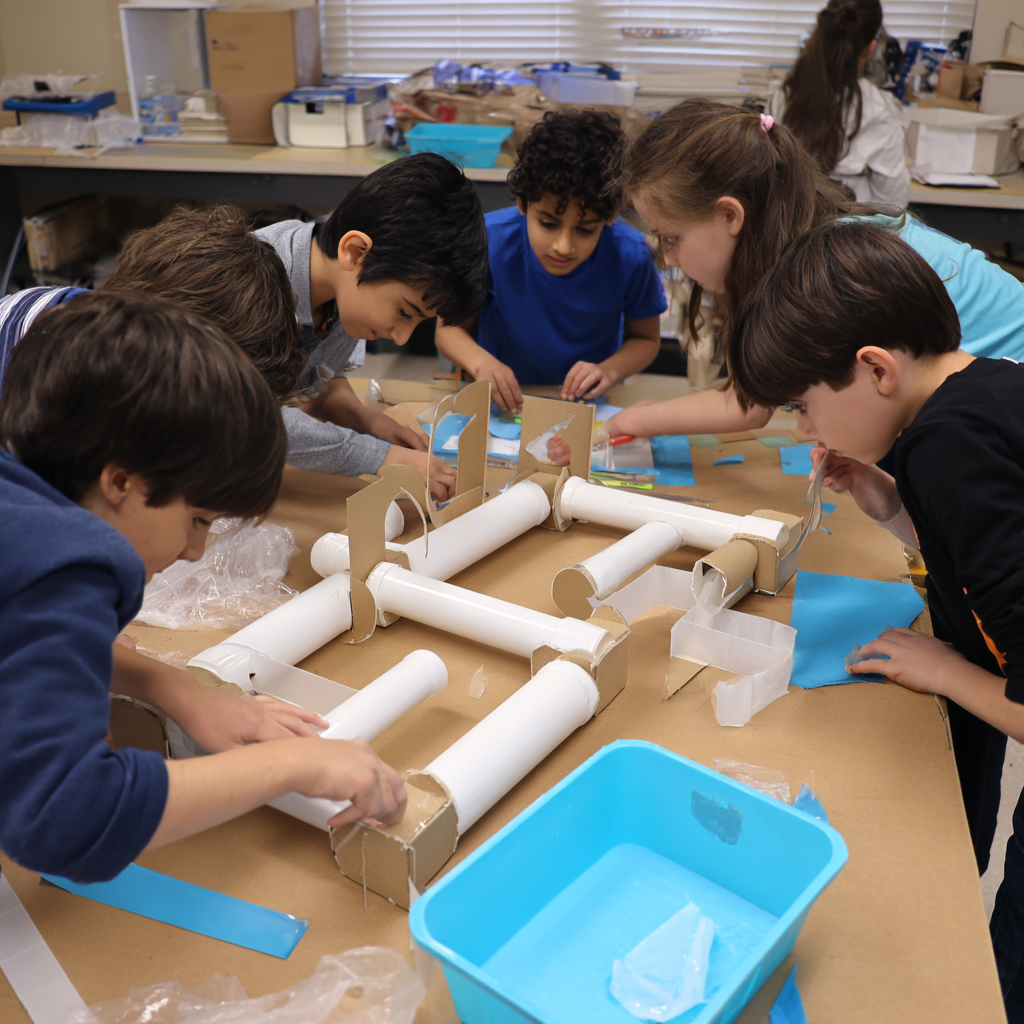
Arizona has embraced a collaborative approach, often pairing schools with industry and community organizations to expose students to STEM and trades early. A great example comes from Mesa, Arizona’s largest school district. Mesa Public Schools has a strong focus on career-connected learning, even in the elementary years. Recently, Mesa partnered with a local construction company (Sundt) and an education startup (STIIX) to bring a construction-themed engineering project to thousands of elementary students. In this initiative, over 150 classroom kits were assembled and delivered to schools and youth organizations, reaching more than 6,000 Phoenix-area students with a hands-on project. These kits, which included materials for building model hydraulic lifts, gave kids a tangible, age-appropriate taste of construction engineering. “Watching students build the STIIX hydraulic kits has been powerful. These kits spark curiosity, encourage teamwork, and create authentic opportunities for students to apply engineering practices in a hands-on way,” said Pam Clabaugh, a STEM specialist in Mesa. She noted that as a district “deeply focused on career connected opportunities… initiatives like this are crucial” to make learning real for students. The success of the Mesa program shows how public-private partnerships can reduce the resource burden on schools while inspiring kids with industry relevant projects. It’s one thing to read about bridges in a textbook; it’s another to assemble a working mini-hydraulic lift in 5th grade and see science in action.
Elsewhere in Arizona, schools are finding creative ways to spark interest. In Phoenix, Kenilworth Elementary introduced weekly hands-on engineering classes for 2nd and 3rd graders through a collaboration with STIIX. The impact was immediate – students were thrilled to come to school for those STEM sessions, and parents reported their children “love coming to school because of the fun they have with STIIX”. The school’s principal observed that bringing in outside expertise and project kits not only engaged the kids, but improved the overall school culture, teachers and students alike were energized by the new opportunities. Arizona has also invested in specialized middle schools focused on STEM and career themes (for example, Phoenix’s Creighton School District opened a STEM academy for grades 6-8 with project-based learning labs). And through initiatives like the state’s Career and Technical Education curriculum, Arizona ensures courses such as Career Exploration, Introduction to Technology & Engineering, and even Production Technology (manufacturing) are available in middle school to introduce students to skilled trades. By the time Arizona students leave 8th grade, many have already built robots, written code, visited job sites, or met professionals from a variety of fields. They enter high school not as blank slates, but as young people with glimpses of possible futures.
- Illinois -
Illinois, too, recognizes the middle grades as a pivotal time for career introduction. The Illinois State Board of Education has authorized middle school courses that give students an overview of technical fields. For instance, Illinois schools can offer “Career Exploration” as a course where students identify personal interests and research various career options. They also offer introductory courses like “Introduction to Technology & Engineering” and “Production Technology”, which expose students to manufacturing and construction concepts through hands-on activities and highlight the many career opportunities in those industries. Even at age 13, students might be drafting simple blueprints, learning how products are designed and built, or practicing with safe tools under supervision – experiences that spark interest in trades and engineering early on. Illinois has invested in out-of-school programs as well, such as 4-H STEM camps for middle schoolers and partnerships with local science centers in cities like Chicago to run STEM challenges for elementary kids. Moreover, Illinois’s College and Career Pathway Endorsements (a high school program) encourage districts to create a feeder from middle school – meaning students start exploring pathway themes (such as IT, Health, or Manufacturing) in 7th and 8th grade, then carry that focus into a full pathway in high school. By formalizing these opportunities, Illinois signals that career development is a continuous journey that begins early. When an Illinois middle schooler spends a quarter learning about, say, energy technology or graphic design, it can ignite a passion that leads them to choose relevant high school electives and even postsecondary training. The state’s role is to make sure those opportunities exist statewide, not just in a few fortunate districts.
From Policy to Practice: Overcoming Barriers with Hands-On Solutions
As we look across these examples, a common theme emerges: policy changes and school programs must ultimately translate to engaging classroom experiences. It’s one thing to mandate a career exploration course; it’s another to equip a classroom of 7th graders with meaningful projects that don’t overwhelm the teacher. Early STEM and CTE implementation can face challenges, elementary teachers may feel less confident teaching engineering or coding, budgets are often tight for lab materials, and curriculum time is limited. That’s where innovative solutions and partnerships play a crucial role in reducing barriers.
One promising approach is the use of ready-to-go project kits and curricula that make hands-on STEM/CTE easy to implement. For example, STIIX, a social enterprise focused on early STEM, has developed affordable, teacher-friendly project kits that any teacher can use, even without specialized training. These kits come complete with all materials and lesson guides, covering topics from simple machines to renewable energy. A teacher can effectively turn her classroom into a mini-makerspace without needing thousands of dollars of equipment. “There are a lot of kits out there... but this is the first I’ve used that provides everything you need besides the students and a workspace,” said one elementary STEM teacher about the STIIX kits, noting that her fourth-graders could work confidently on projects with minimal assistance. By lowering cost and complexity, such kits empower teachers to facilitate rich STEM experiences as early as grade 2 or 3. This is crucial because a passionate teacher plus an engaging project is often the spark that will hook a young learner.
Additionally, these hands-on kits and programs align with standards and are scalable. District leaders can adopt them as part of an “Earlier Than Expected” initiative knowing that they support the state’s learning goals. For instance, a kit on water filtration not only teaches engineering design but hits science standards on earth materials – a double win for test scores and inspiration. And because solutions like STIIX are modular and affordable, so even cash-strapped or rural schools can participate in the early STEM movement in a sustainable way. It levels the playing field by offering a plug-and-play way to give kids that crucial exposure.
We’re also seeing companies, non-profits, and higher education institutions step up to partner with schools. Whether it’s a local business donating equipment or a community college lending expertise for a middle-school workshop, these collaborations can supply the real-world context and resources that make early STEM/CTE come alive. The earlier example from Arizona, Sundt Construction working with Mesa schools is a perfect illustration: the company’s involvement provided industry relevance (construction careers) and philanthropic support (funding kits for thousands of kids). District leaders should not hesitate to reach out to local industries and say, “Help us inspire the next generation of your workforce, come into our 5th grade classrooms, or help us build a fab lab for 8th graders.” Most industries are eager to build their future talent pipeline and will welcome the opportunity.
Moving Forward: Calls to Action for Educators and Partners
Early STEM and CTE exposure is no longer a novel idea – it’s a burgeoning movement, backed by research and gaining traction via state policies and district innovation. But to truly realize its promise, action is required on multiple fronts. Here are a few calls to action for stakeholders:
State and District Leaders
Take a cue from states like Nevada, Georgia, and Florida by embedding early STEM/CTE in your strategic plans and policies. This could mean allocating funding for elementary STEM labs, requiring a middle school career exploration course, or incentivizing schools to start STEM clubs at the K–5 level. Review your current offerings: are you waiting until 9th grade to offer technical education? If so, strategize how to push that down to 7th or even 5th. Set measurable goals (e.g. “100% of our middle schoolers will experience at least one CTE module each year” or “Every elementary school will have a STEM event each semester”). Concrete targets drive action.
School Administrators and Principals
You are the bridge between policy and classroom practice. Foster a culture of exploration in your schools. Encourage your teachers to try interdisciplinary projects that tie science or tech into other subjects. Identify champions on your staff – perhaps a 4th grade teacher who loves robotics as a hobby – and support them in leading new initiatives. Don’t be afraid to start small: a lunchtime coding club or a once-a-month “Career Speaker” series for 6th graders can kickstart bigger changes. Also, tap into resources like STEM Action Centers, professional development workshops, and grants (many states offer micro-grants for STEM activities) to build your school’s capacity. Remember Montgomery’s approach: make it part of your school’s identity that “we prepare kids for the real world from day one.”
Teachers
Know that you don’t have to be a rocket scientist to ignite a love of STEM in your students. Plenty of curriculum resources and turnkey kits (such as those by STIIX) are designed for regular classroom teachers – you can facilitate a project on wind energy or bridge-building without specialized training. Take advantage of training sessions, online communities, and support offered by initiatives like You Belong in STEM. Even integrating a single hands-on science activity or career-related discussion into your month can have a lasting impact. For example, try a “Career of the Week” spotlight in your morning routine, or let students spend a class period building something – these experiences are often the ones that stick. Also, share successes with your administrators; when they see the excitement in your classroom, it strengthens the case for more investment in early STEM/CTE.
Community and Industry Partners
Your expertise and resources are invaluable. Partner with schools to provide mentorship, materials, or real-world challenges for students to solve. Something as simple as sending a young engineer or tradesperson to an elementary classroom to show off their tools and talk about their job can expand kids’ perceptions of what’s possible. If you’re a business, consider sponsoring STEM kits or donating old equipment (e.g. an auto shop might give a school an engine model, a tech company might donate laptops for a coding club). Join forces with organizations like STIIX or local STEM nonprofits that have pipelines into schools – through these, your contributions can reach multiple classrooms efficiently. Remember, today’s third grader tinkering with a project kit could be your company’s star employee a decade from now. Investing in the “Earlier Than Expected” effort is investing in your future workforce and community.
Program Developers and Initiative Leads
Those of you designing the “Earlier Than Expected” initiative (or whatever it will be named) – ensure that it remains practical, inclusive, and scalable. Keep engaging with on-the-ground educators to refine the approach. It’s not just about awareness that early exposure is good; it’s about giving schools the tools and support to act on that knowledge. Continue to gather data on what early exposure yields – e.g., are we seeing increased enrollment in high school STEM electives? More students expressing interest in skilled trades? Use those metrics to celebrate wins and sustain momentum. And when branding the initiative, choose a name that resonates with both educators and the public (perhaps one of the alternatives above or a combination thereof). A strong brand can rally stakeholders statewide or even nationally around the cause of early STEM and CTE.
The examples from Alabama to Arizona show that transformation is possible when vision and action unite. Children are naturally curious; they will rise to the expectations and opportunities we set for them. It’s our job as adults , policymakers, educators, and partners to ensure those opportunities come earlier than expected, when that curiosity is at its peak. By doing so, we nurture a generation of thinkers, builders, and problem-solvers who are not just prepared for the future, but eager to lead it. The challenge now is to expand these efforts, learn from each other, and make early STEM and CTE exposure a standard part of every child’s journey. The groundwork is laid , now let’s scale it up. It’s time to turn crayons into career tools, and classrooms into launchpads for future innovators.
“These are not ‘less than’ jobs… These are valuable careers,” notes Leah Bigbee of Jefferson State, emphasizing that "many kids simply aren’t aware of lucrative trade pathways"
At the policy level, Alabama has implemented a K–12 Career Development Model to embed career awareness at every grade. Even in elementary school, Alabama teachers introduce the idea of different jobs and connect classroom learning to real-world careers. By middle school, students take formal career exploration courses and interest assessments, ensuring each student enters high school with a personalized education plan. This aligns with Alabama’s broader workforce strategy. Governor Kay Ivey’s Strong Start, Strong Finish initiative connects early childhood, K–12, and workforce development efforts into one pipeline.
From Policy to Practice: Overcoming Barriers with Hands-On Solutions
As we look across these examples, a common theme emerges: policy changes and school programs must ultimately translate to engaging classroom experiences. It’s one thing to mandate a career exploration course; it’s another to equip a classroom of 7th graders with meaningful projects that don’t overwhelm the teacher. Early STEM and CTE implementation can face challenges; elementary teachers may feel less confident teaching engineering or coding, budgets are often tight for lab materials, and curriculum time is limited. That’s where innovative solutions and partnerships play a crucial role in reducing barriers.
One promising approach is the use of ready-to-go project kits and curricula that make hands-on STEM/CTE easy to implement. For example, STIIX, a social enterprise focused on early STEM, has developed affordable, teacher-friendly project kits that any teacher can use, even without specialized training. These kits come complete with all materials and lesson guides, covering topics from simple machines to renewable energy. A teacher can effectively turn her classroom into a mini-makerspace without needing thousands of dollars of equipment. “There are a lot of kits out there... but this is the first I’ve used that provides everything you need besides the students and a workspace,” said one elementary STEM teacher about the STIIX kits, noting that her fourth-graders could work confidently on projects with minimal assistance. By lowering cost and complexity, such kits empower teachers to facilitate rich STEM experiences as early as grade 2 or 3. This is crucial because a passionate teacher plus an engaging project is often the spark that will hook a young learner.
Additionally, these hands-on kits and programs align with standards and are scalable. District leaders can adopt them as part of an “Earlier Than Expected” initiative knowing that they support the state’s learning goals. For instance, a kit on water filtration not only teaches engineering design but hits science standards on earth materials – a double win for test scores and inspiration. And because solutions like STIIX are modular and affordable, even cash-strapped or rural schools can participate in the early STEM movement. It levels the playing field by offering a plug-and-play way to give kids that crucial exposure.
We’re also seeing companies, non-profits, and higher education institutions step up to partner with schools. Whether it’s a local business donating equipment or a community college lending expertise for a middle-school workshop, these collaborations can supply the real-world context and resources that make early STEM/CTE come alive. The earlier example from Arizona – Sundt Construction working with Mesa schools – is a perfect illustration: the company’s involvement provided industry relevance (construction careers) and philanthropic support (funding kits for thousands of kids). District leaders should not hesitate to reach out to local industries and say, “Help us inspire the next generation of your workforce – come into our 5th grade classrooms, or help us build a fab lab for 8th graders.” Most industries are eager to build their future talent pipeline and will welcome the opportunity.
Moving Forward: Calls to Action for Educators and Partners
Early STEM and CTE exposure is no longer a novel idea – it’s a burgeoning movement, backed by research and gaining traction via state policies and district innovation. But to truly realize its promise, action is required on multiple fronts. Here are a few calls to action for stakeholders:
State and District Leaders
Take a cue from states like Nevada, Georgia, and Florida by embedding early STEM/CTE in your strategic plans and policies. This could mean allocating funding for elementary STEM labs, requiring a middle school career exploration course, or incentivizing schools to start STEM clubs at the K–5 level. Review your current offerings: are you waiting until 9th grade to offer technical education? If so, strategize how to push that down to 7th or even 5th. Set measurable goals (e.g. “100% of our middle schoolers will experience at least one CTE module each year” or “Every elementary school will have a STEM event each semester”). Concrete targets drive action.
School Administrators and Principals
You are the bridge between policy and classroom practice. Foster a culture of exploration in your schools. Encourage your teachers to try interdisciplinary projects that tie science or tech into other subjects. Identify champions on your staff – perhaps a 4th grade teacher who loves robotics as a hobby – and support them in leading new initiatives. Don’t be afraid to start small: a lunchtime coding club or a once-a-month “Career Speaker” series for 6th graders can kickstart bigger changes. Also, tap into resources like STEM Action Centers, professional development workshops, and grants (many states offer micro-grants for STEM activities) to build your school’s capacity. Remember Montgomery’s approach: make it part of your school’s identity that “we prepare kids for the real world from day one.”
Teachers
Know that you don’t have to be a rocket scientist to ignite a love of STEM in your students. Plenty of curriculum resources and turnkey kits (such as those by STIIX) are designed for regular classroom teachers – you can facilitate a project on wind energy or bridge-building without specialized training. Take advantage of training sessions, online communities, and support offered by initiatives like You Belong in STEM. Even integrating a single hands-on science activity or career-related discussion into your month can have a lasting impact. For example, try a “Career of the Week” spotlight in your morning routine, or let students spend a class period building something – these experiences are often the ones that stick. Also, share successes with your administrators; when they see the excitement in your classroom, it strengthens the case for more investment in early STEM/CTE.
Community and Industry Partners
Your expertise and resources are invaluable. Partner with schools to provide mentorship, materials, or real-world challenges for students to solve. Something as simple as sending a young engineer or tradesperson to an elementary classroom to show off their tools and talk about their job can expand kids’ perceptions of what’s possible. If you’re a business, consider sponsoring STEM kits or donating old equipment (e.g. an auto shop might give a school an engine model, a tech company might donate laptops for a coding club). Join forces with organizations like STIIX or local STEM nonprofits that have pipelines into schools – through these, your contributions can reach multiple classrooms efficiently. Remember, today’s third grader tinkering with a project kit could be your company’s star employee a decade from now. Investing in the “Earlier Than Expected” effort is investing in your future workforce and community.
Program Developers and Initiative Leads
Those of you designing the “Earlier Than Expected” initiative (or whatever it will be named) – ensure that it remains practical, inclusive, and scalable. Keep engaging with on the ground educators to refine the approach. It’s not just about awareness that early exposure is good; it’s about giving schools the tools and support to act on that knowledge. Continue to gather data on what early exposure yields – e.g., are we seeing increased enrollment in high school STEM electives? More students expressing interest in skilled trades? Use those metrics to celebrate wins and sustain momentum. And when branding the initiative, choose a name that resonates with both educators and the public (perhaps one of the alternatives above or a combination thereof). A strong brand can rally stakeholders statewide or even nationally around the cause of early STEM and CTE.
The examples from Alabama to Arizona show that transformation is possible when vision and action unite. Children are naturally curious; they will rise to the expectations and opportunities we set for them. It’s our job as adults , policymakers, educators, and partners to ensure those opportunities come earlier than expected, when that curiosity is at its peak. By doing so, we nurture a generation of thinkers, builders, and problem solvers who are not just prepared for the future, but eager to lead it. The challenge now is to expand these efforts, learn from each other, and make early STEM and CTE exposure a standard part of every child’s journey. The groundwork is laid , now let’s scale it up. It’s time to turn crayons into career tools, and classrooms into launchpads for future innovators.
Latest Articles
All Articles.jpg)
Stop "Exposing" Students to Careers—Start Letting Them Build Them
At STIIX, we believe that expertise shouldn't be reserved for high school CTE labs. If we want a generation of innovators, we have to start the "expertise" phase in K-8.
%20%26%20Partnership%20Annoucement.png)
Drone Cadets and STIIX Announce Strategic Partnership to Revolutionize STEM Education and Career Readiness
STIIX, a leader inimmersive engineering and career-connected learning, is proud to announce a strategic partnership with Drone Cadets, a leader in accessible drone education and pilot training. This collaboration marks a significant milestone in STEM education, coupling STIIX’s hands-on engineering curriculum with Drone Cadets’ world-class flight training to create a comprehensive "Build-to-Fly" learning pathway.
Why Career Exploration Works Better When It Starts Earlier
Career exploration works best when it is treated not as a decision point, but as a developmental process that begins earlier and builds over time. Hands-on engineering is often discussed as a goal, but not always as a practical option. Many programs have experienced the two extremes: expensive equipment that sits unused due to complexity, or limited materials that restrict learning to surface-level activities. This is where easily implemented, well-designed engineering projects play an important role.