Stop "Exposing" Students to Careers—Start Letting Them Build Them
We’ve all seen the traditional "Career Day." A professional stands at the front of a classroom, talks for 20 minutes, and hands out stickers. It’s called Career Awareness, and while it’s a great start, it often stops right where the real learning should begin.
In a recent piece by Defined Learning, they argued that "Exposure" isn't enough. To truly prepare a student for the future, we have to move toward Expertise. At STIIX, we believe that expertise shouldn't be reserved for high school CTE labs. If we want a generation of innovators, we have to start the exploration phase in K-8. If we want to close the "skills gap" everyone is talking about, we have to move past exposure and get into Expertise. To truly prepare a student for the future, they need to feel the weight of the tools in their hands. They need to understand that the "skilled trades" aren't a fallback plan—they are high-tech, high-wage, and high-demand careers that power our world.
The K-8 Curiosity Window
Middle schoolers are in a unique developmental stage. They are moving from "learning to read" to "reading to learn," and they are starting to ask the most dangerous question in education: "When am I ever going to use this?"
By bringing hands-on, career-connected engineering into the K-8 classroom, we answer that question before it’s even asked. When a student builds a Bio-Pulse Monitor to help a Stiixville runner, they aren't just "learning about" biomedical engineering. They are doing the work of a biomedical engineer.
.jpg)
Why Hands-On Beats the Screen
We are an "analog-first" company for a reason. Real-world expertise doesn't happen behind a screen; it happens when a student has to figure out why a balsa spar is snapping or why a circuit isn't closing. When a student engages in tactile, physical building, they are practicing Durable Skills:
- Iteration: Understanding that failure isn't the end—it's just a data point.
- Precision: Realizing that a millimeter of difference in a wing rib is the difference between lift and a stall.
- Technical Literacy: Following a complex manual to achieve a physical result.
The "Hands-on" Muscle: Developing Mechanical Sympathy
In the modern workforce, there is a term called "mechanical sympathy." it’s the ability to understand how a machine works just by the way it feels, sounds, or responds. You don't get that from a screen.
At STIIX, our projects are designed to develop this muscle early. When a student builds one of our kits, they aren’t just following a recipe. They are learning:
- Precision: Why a millimeter of misalignment in a wing rib leads to a stall.
- Troubleshooting: Why a circuit doesn't close on the first try and how to trace the fault.
- Spatial Awareness: How to translate a 2D diagram into a 3D flying machine.
These aren't "soft skills." They are the foundational durable skills required by every Aviation Maintenance Technician (AMT) and Robotics Specialist in the country.
The Drone as a Gateway: Part 107 and Beyond
Our drone kit is the perfect example of this "Expertise" model. Most people see a drone as a toy. We see it as the modern-day Swiss Army knife for the Part 107 Remote Pilot pathway. By the time a student reaches high school, we want them to look at a drone and see a career in:
- Infrastructure Analysis: Using high-resolution sensors to check for structural fatigue on bridges.
- Precision Agriculture: Mapping crop health with NDVI data to save thousands of gallons of water.
- Geospatial Analytics: Turning raw aerial data into 3D models for city planning.
By performing these missions in a classroom setting, we’re expanding a student’s perspective. They realize that "flying" isn't the job—data analysis and mission execution are the jobs.
The Hangar Logic: Bridging to Part 147
While half the class is focused on the flight path, the other half is learning the "Hangar Logic" of the FAA Part 147 standards. The aviation industry is currently facing a massive shortage of certified maintenance technicians. These are careers that start with six-figure potential and don't require a four-year degree, yet many students don't even know they exist.
When a student builds the airframe of a STIIX drone, they are practicing the structural engineering of an AMT. They are learning about:
- Airframe Integrity: How spars and ribs provide the strength-to-weight ratio needed for flight.
- Propulsion Systems: The mechanics of motor torque and electronic speed controllers.
- Return to Service: The discipline of a pre-flight checklist, ensuring every nut and bolt is secure before "takeoff."
Why Schools are the Ultimate Workforce Pipeline
Schools have a unique opportunity to be the greatest workforce development engine in history. But to do that, we have to stop treating "trades" as something separate from "academics." When a middle schooler calculates the Torque needed for a drone motor or uses Geometry to plan a mapping grid, they aren't just doing math—they are doing a "test drive" of their future specialty. By bringing these high-stakes, real-world concepts down to the K-8 level, we give students the chance to find their lane early. We give them the confidence to walk into a high school CTE program not as a stranger to the tech, but as a junior expert.
The STIIX-Ville Difference
In the STIIX-Ville ecosystem, every project is a "Mission." We don't just ask students to "build a crane." We ask them to "Restore power to the Stiixville grid after a storm." This narrative-driven approach turns "school work" into "mission work." It moves the needle from passive exposure to active mastery. The open-ended design challenge nature of the majority of STIIX's PBL activities naturally help them align to the PBL Works Gold set of standards. Modules in the STIIX app further enhance alignment and Career Readiness initiatives.
Let’s Build the Future, One Rib at a Time
The goal of K-12 education shouldn't just be to get students to graduation. It should be to get them to a career they love and a life they can sustain. That journey starts with a piece of balsa wood, a brass fastener, and a mission that matters.
Are you ready to move your students from exposure to expertise?
[Explore the STIIX Pathway Aligned Project]
[Request a Quote for Your District]
Latest Articles
All Articles%20%26%20Partnership%20Annoucement.png)
Drone Cadets and STIIX Announce Strategic Partnership to Revolutionize STEM Education and Career Readiness
STIIX, a leader inimmersive engineering and career-connected learning, is proud to announce a strategic partnership with Drone Cadets, a leader in accessible drone education and pilot training. This collaboration marks a significant milestone in STEM education, coupling STIIX’s hands-on engineering curriculum with Drone Cadets’ world-class flight training to create a comprehensive "Build-to-Fly" learning pathway.
Why Career Exploration Works Better When It Starts Earlier
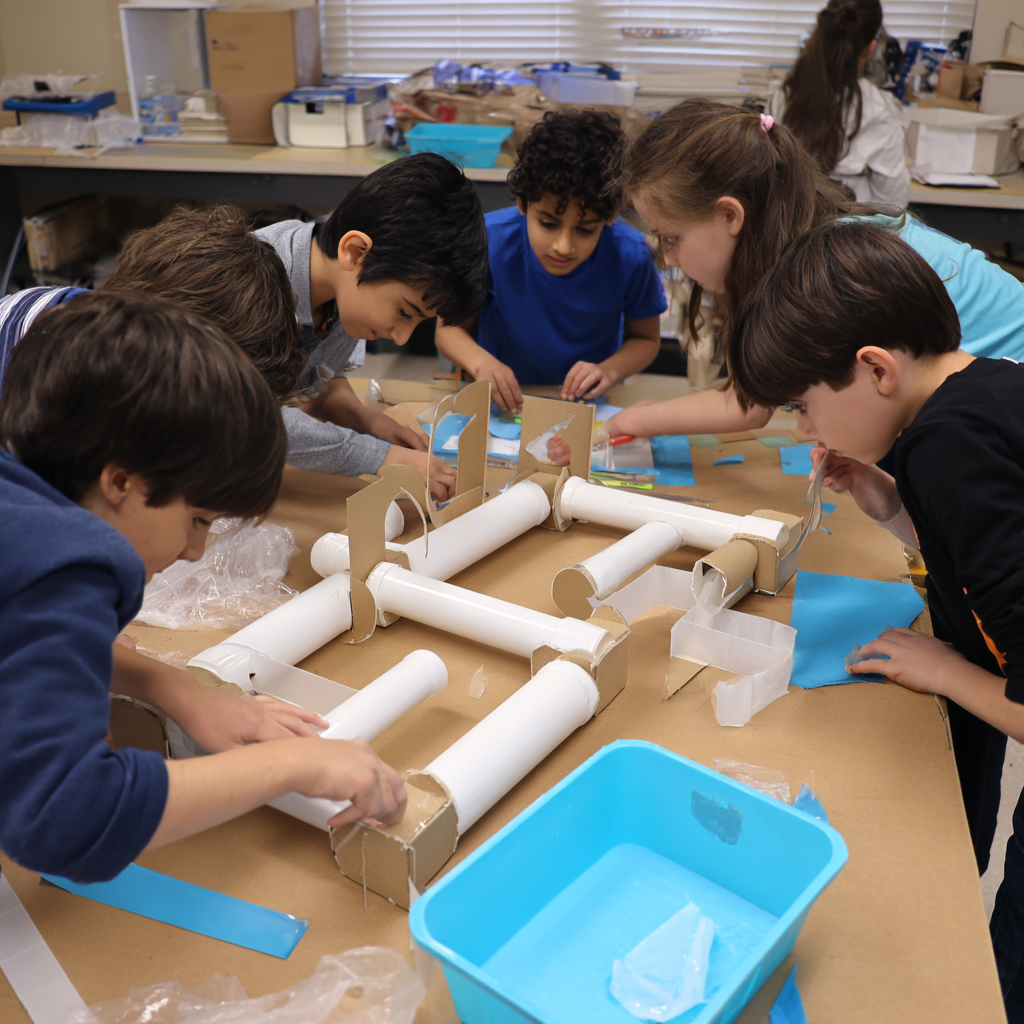
Career exploration works best when it is treated not as a decision point, but as a developmental process that begins earlier and builds over time. Hands-on engineering is often discussed as a goal, but not always as a practical option. Many programs have experienced the two extremes: expensive equipment that sits unused due to complexity, or limited materials that restrict learning to surface-level activities. This is where easily implemented, well-designed engineering projects play an important role.
From Crayons to Careers: Expanding STEM & CTE Exposure in K–8 Education
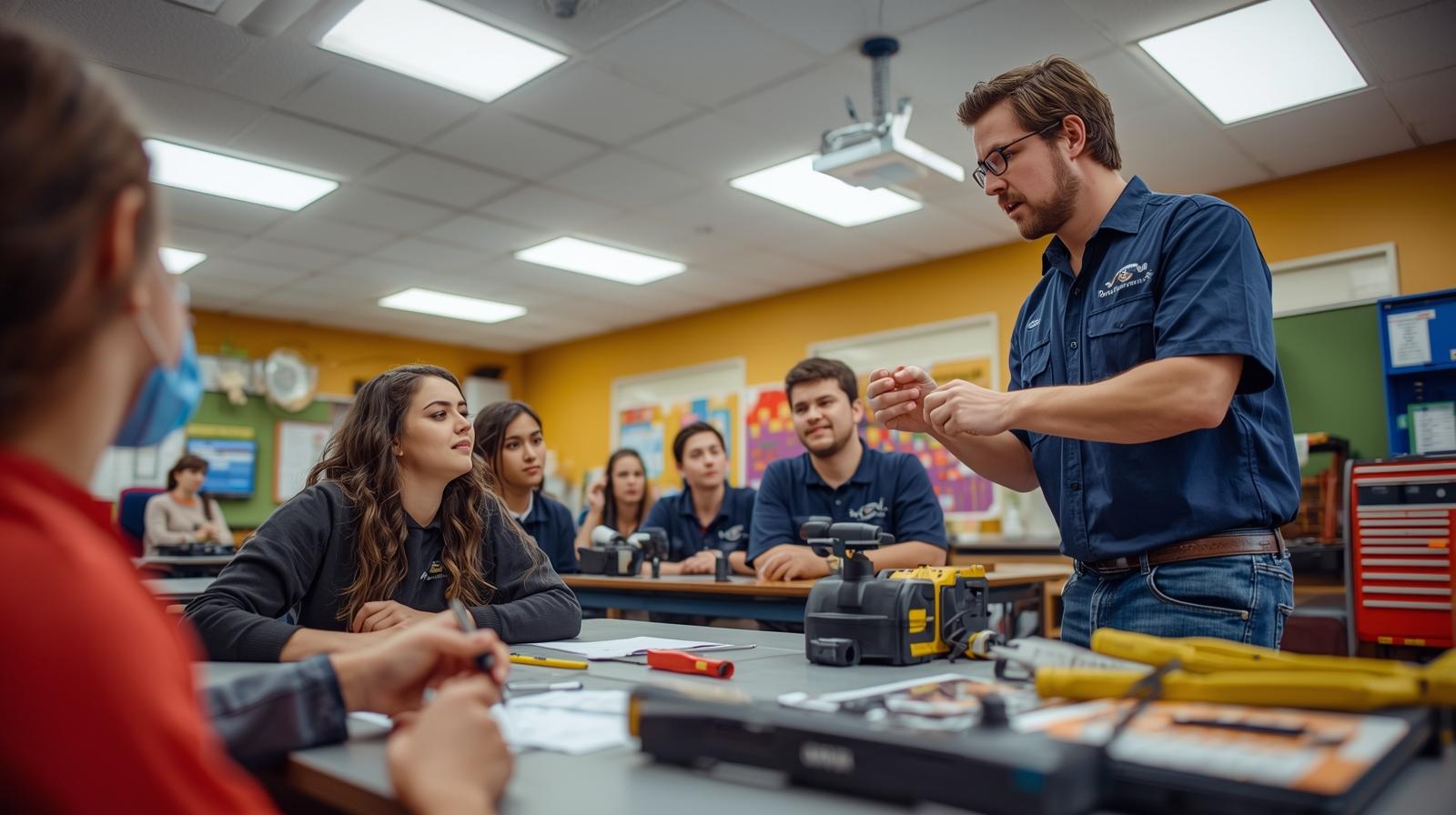
Early career exploration is essential for workforce development and to grow the career perspectives for students everywhere. STIIX empowers PreK–8 students through hands-on, project-based engineering experiences that spark curiosity, creativity, and problem solving. Our kits guide learners through real-world challenges that encourage exploration, iteration, and collaboration. Designed by educators and aligned to national and state standards, each experience is easy to implement and flexible enough to support a wide range of learning environments. STIIX is built to meet the needs of busy classrooms while giving teachers the tools to build confidence and engagement in every student. Projects are designed to fit into structured class periods or enrichment programs and include clear instructional resources. Connect with us to bring STIIX hands-on learning to your school or program.